| Role | Researcher |
| Tasks | Interdisciplinary Research | Literature Review | Web App/Interface/Info Viz |
| Client | Public Service | Personal Project |
"I didn't think a battery that size would take my house down in 45 minutes."
Lithium-ion
batteries (LIBs) and related battery technologies are increasingly essential,
powering modern devices, vehicles, energy infrastructure, and more.
However, such batteries can catch fire, reaching temperatures hotter than other types of fires. LIBs undergo a
type of self-reinforcing reaction called
thermal
runaway leading to
devastating damage and loss. LIB fires can be extremely difficult to extinguish and can reignite after they
appear extinguished.
While LIB fires are relatively uncommon per device, the consequences can be severe.
LIB fires can result in more than 3 times the property damage of an average fire
from other
causes. Incidents have occurred with phones and devices,
power tools,
drones,
e-mobility,
electric vehicles,
aircraft,
cargo shipping,
battery
factory*, energy storage facilities, and robots*,
potentially leading to serious injury and death. More generally, any product or device containing one or more
LIB may pose a fire risk. Recent incident tracking data shows that LIB fires are no longer rare events with 2500 incidents in 2025
from US fire data.
In response, lithium-ion batteries, of which there are various types, are being more strictly regulated or
prohibited
in commercial air travel and other domains.
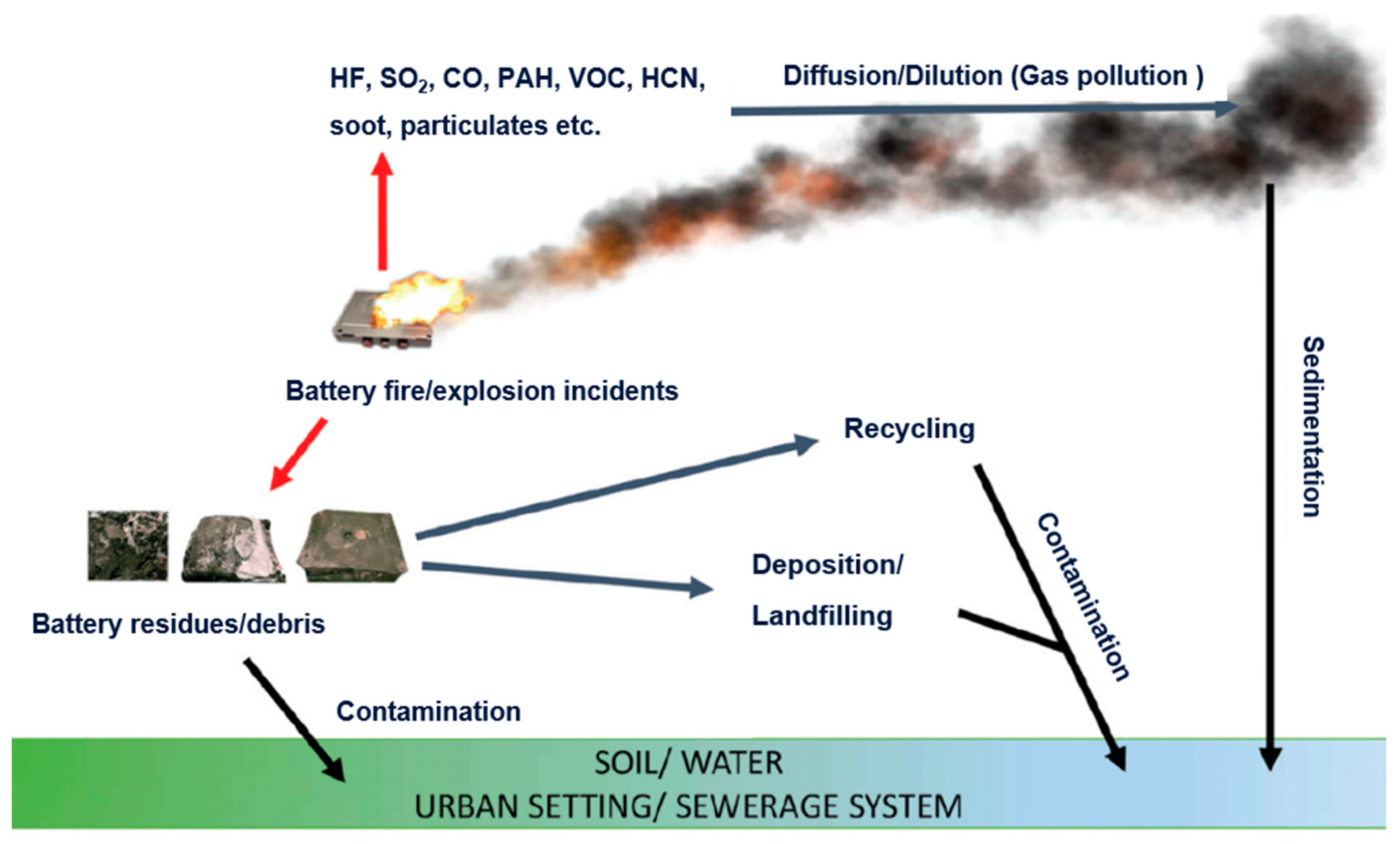
However, beyond the direct fire damage are hidden and less understood
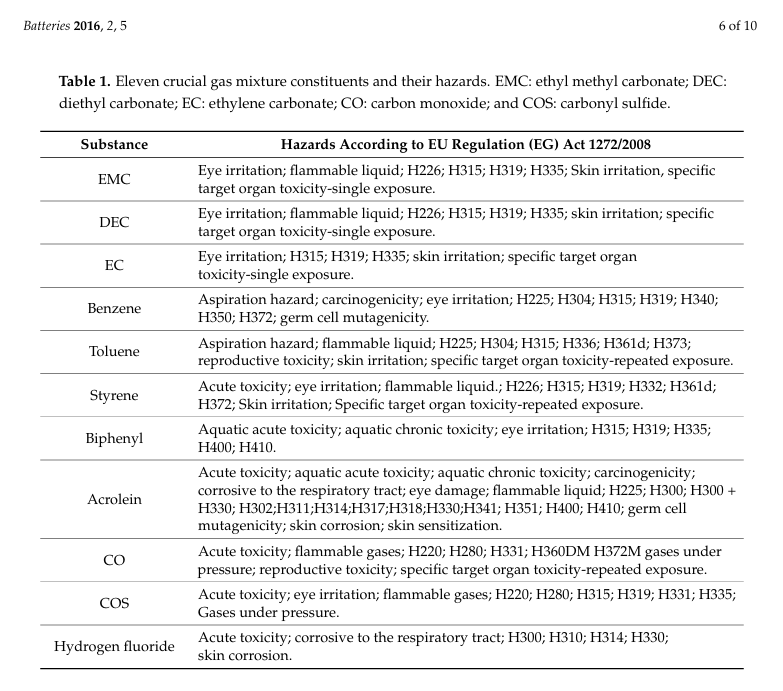
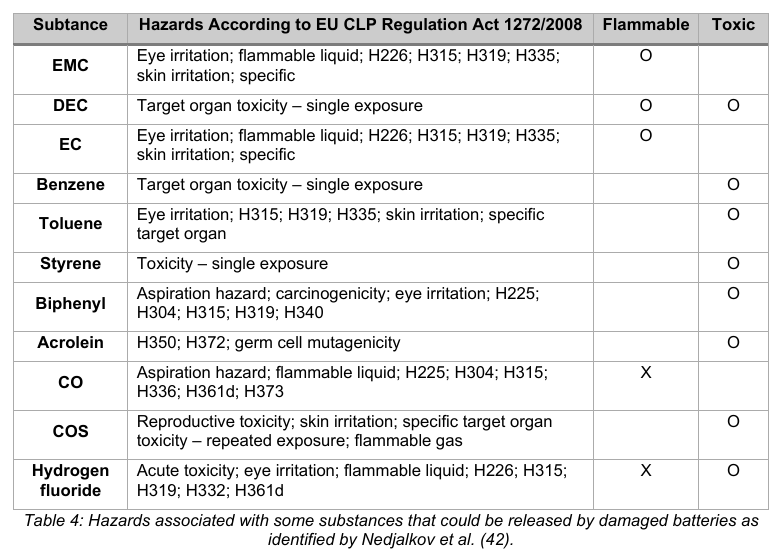
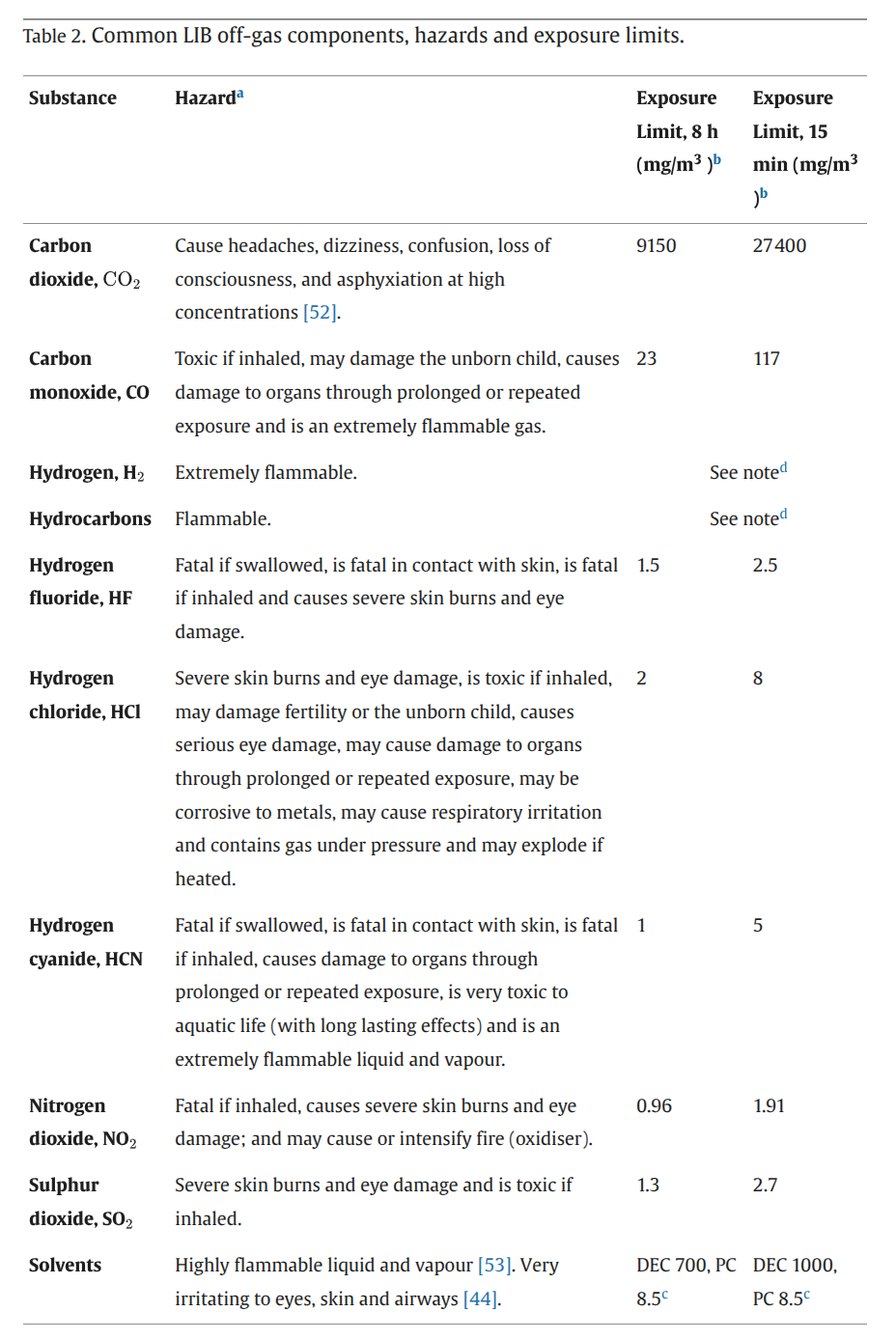
toxic contamination effects of lithium-ion battery fires. These toxic effects persist even after the initial
flames are
extinguished. Contamination can be odorless and invisible to the naked eye. The long-term implications for
safety and material damage are not always well understood.
Thermal is a personal project to find resources on LIB fire impacts to human
health, material/property damage, toxic contamination and the solutions.
Please note, I'm not a certified
professional in this field and LIB incidents should be reported to relevant authorities and
emergency services. I have direct experience handling a lithium-ion battery fire and its consequences including
significant time interacting with the relevant professionals and authorities including industrial hygienists and hazardous materials management (HAZMAT) specialists. This project is a
summary and encapsulation of what I have learned post-incident.
The dangers of inadequate risk mitigation and the widespread use of potentially faulty LIB products cannot be underestimated. In the context of
aging-in-place
where individuals already require additional help in technology use, LIBs pose disproportionate risks to
safety due to the violent and rapid nature of the fire, release of toxic gases, and long-term contamination.
Selected public domain resources and article links
from the scientific literature, industry sites and reports, and regulatory sources are provided in the Articles List for easy reference.
These were selected for their relevance to LIB fires, with a focus on health effects and fire
contamination toxicity.
Of course, this brief survey is only scratching the surface. Ultimately, the goal of this project is to
improve awareness and understanding to motivate better safety, prevention, mitigation
and restoration practices.
I outline solutions and practical know-how
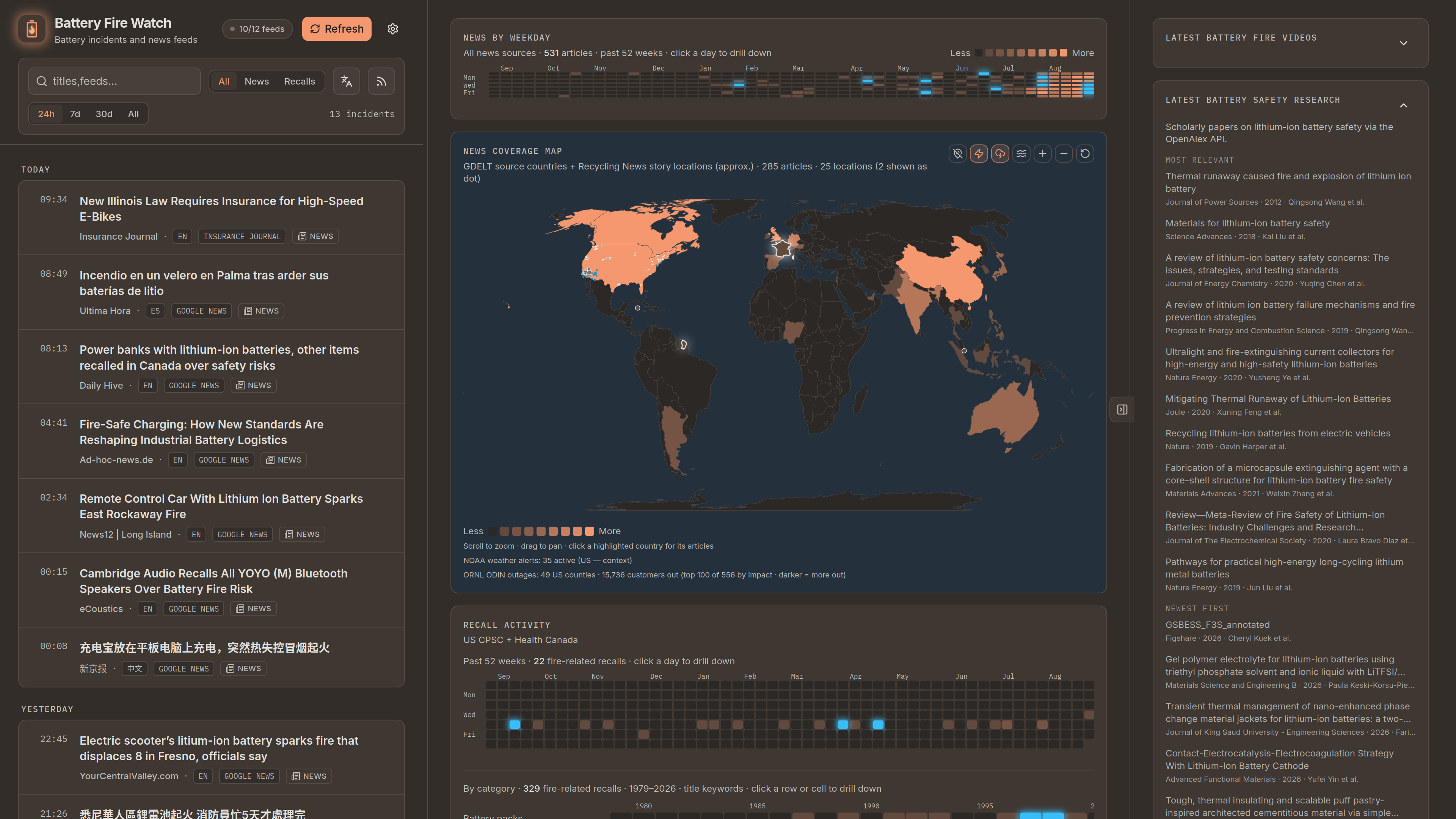
for LIB safety and post-fire incident response. I designed Battery Fire Watch, a data feed interface to track LIB and other battery
incidents and news.
* There are lithium metal batteries which are typically non-rechargeable and have different chemistry than
lithium-ion but can be just as
deadly.
* Humanoid Robots Safety Considerations
from Design to Deployment (video mentions LIB risks in this emerging category).
"Safety is not a gadget but a state of mind."
Eleanor Everet
"Facts do not cease to exist because they are ignored."
Aldous Huxley
"When It Comes To Safety, There Are No Shortcuts."
"With great power comes great responsibility."